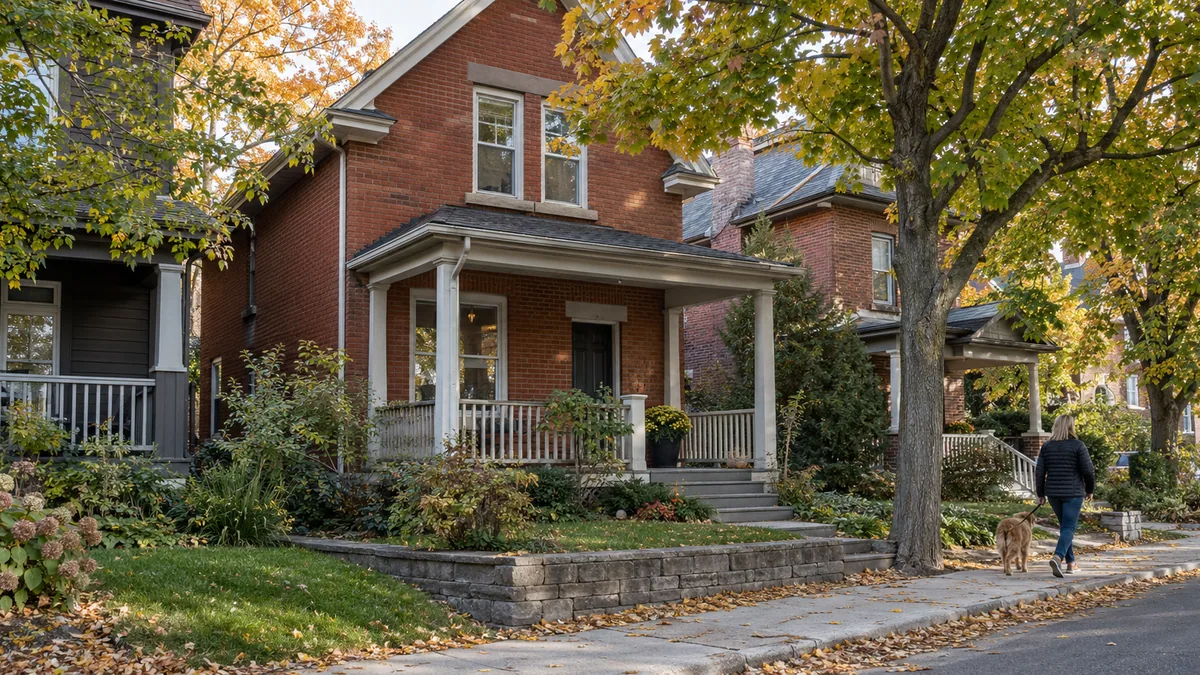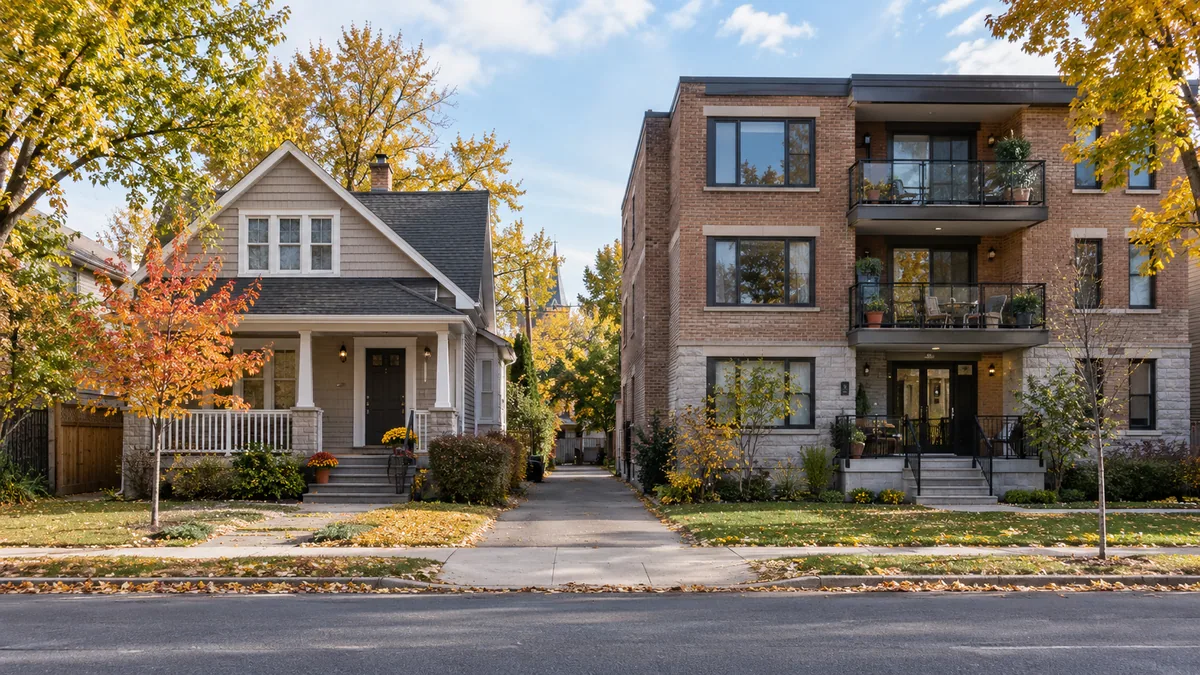
House or apartment? Compare the space, monthly bills, commute and upkeep before you choose.
Use this guide to make a checklist, then confirm the details at a viewing and in the lease.
Check the rooms and usable space
A house may give you several floors, more storage and outdoor space. Check whether you need those areas, since they can also add stairs, cleaning and heating costs.
An apartment may put more of your living space on one floor. Check elevators, entry systems, shared facilities, deliveries and move-in bookings. Measure your furniture and look at storage; photos can make rooms seem larger.
Add up the rent and extra bills
For each home, list rent plus utilities, parking, tenant insurance, internet and commuting. A house with tenant-paid heat and water cannot be compared fairly with an apartment that includes some services by looking at rent alone. Ask what equipment serves the home and who holds each utility account.
Include one-time costs and practical purchases. A house may require agreed snow or lawn equipment; an apartment may charge separately for storage or a second parking space. Do not use a previous occupant's bill as a promise, because usage, weather and rates differ.
Understand upkeep and winter routines
Apartment residents commonly rely on building management for common entrances, grounds and central systems. The tenant still needs to keep the unit reasonably clean, report problems and avoid damage. Response procedures, on-site staffing and building condition vary, so ask how maintenance requests are handled.
At a house, responsibilities for snow, ice, grass, waste containers and outdoor areas need special attention. The lease and Ontario law shape what can be assigned and how. Ask for the arrangement in writing and get legal advice when a clause is unclear; a casual statement during a showing is not enough.
Consider privacy, sound and shared rules
A detached house usually reduces shared-wall noise, while semis and townhouses still share a structure. Apartments place more neighbours near halls, elevators and amenity spaces. Construction, floor location and household habits often matter more than property label, so listen during the viewing and ask about building quiet-hour or booking rules.
Condominium rentals may include rules that apply in addition to the lease. Ask to review relevant rules before committing, especially for pets, smoking, parking, balconies, deliveries and moving. A rule that conflicts with law is a legal question; this guide does not determine enforceability.
Compare the commute and nearby shops
More house inventory is often found outside the central area, while apartments and condos are common in denser neighbourhoods and around major corridors. Treat this as a broad search pattern and compare both property types in the areas that support your commute.
Test trips to work, study, groceries and recurring appointments. Consider winter travel, not only a pleasant-weather map. The value of an extra room can disappear if the location adds an unsustainable commute or requires another vehicle.
Compare homes with one checklist
Score each home using the same checklist: must-haves, monthly cost, commute, condition and who handles repairs. Add notes from your viewing so you can compare the details later.
If a home misses a must-have, keep looking. Before choosing, read the lease and check every included service.
- Does the layout work every day?
- Is the total monthly cost sustainable?
- Are maintenance and outdoor upkeep clear?
- Does the location work in winter and at peak travel times?
- Are building or condominium rules compatible with your needs?